
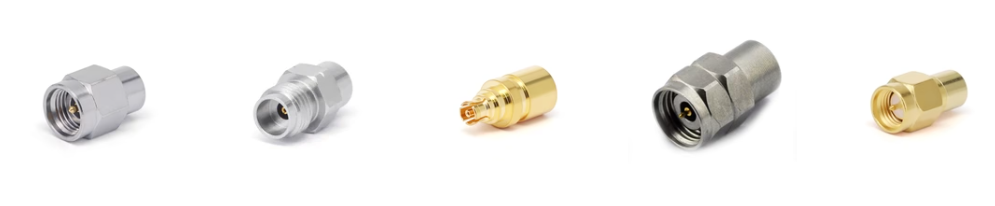
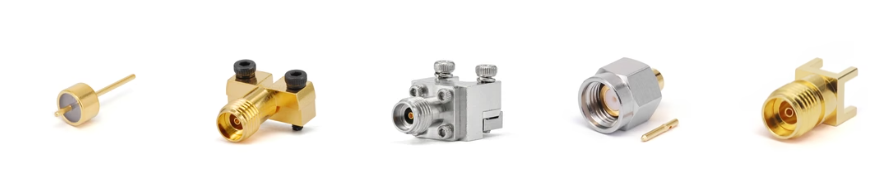
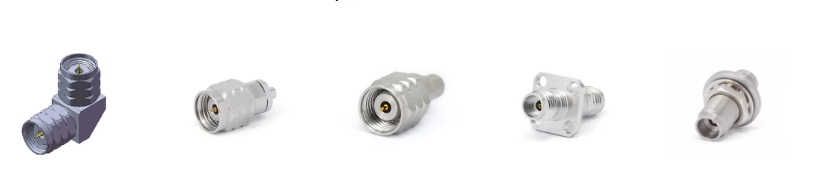
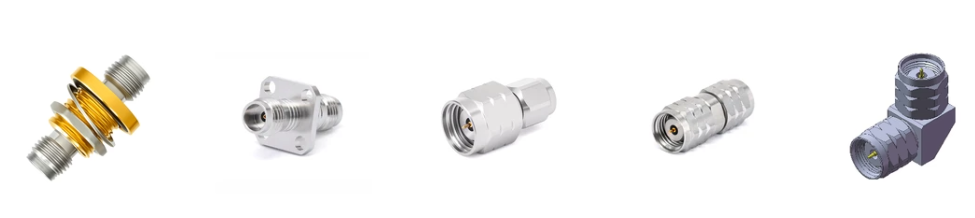
Modern RF and microwave engineering requires high-frequency signal integrity. Performance makes the 2.92 mm connector popular. High repeatability, low signal loss, and stable performance under demanding conditions make this connector suitable for 40 GHz applications. In telecommunications, aerospace, and precision test applications, the 2.92 mm connector delivers reliability and precision for high-frequency systems.
The compact and sturdy 2.92 mm connector is suited for space-constrained applications without compromising electrical performance. When decibels matter, its consistent impedance and mechanical stability reduce signal degradation and reflection. Engineers and system designers can trust the 2.92 mm connector in applications where small variations can cause major concerns.

Signal Transfer Is Smooth With 2.92 Mm Cable
A complete high-frequency solution is possible with the right connector and 2.92 mm cable. The 2.92 mm cable matches the connector's high standards with low insertion loss, stable phase over frequency, and excellent VSWR across its operational spectrum. For signal quality, this cable is ideal for test equipment, antennas, transmitters, receivers, and other RF modules.
Signal integrity is ensured by the 2.92 mm cable's internal architecture and dielectric materials for low loss up to 40 GHz. Mechanical and electrical stability are maintained by the 2.92 mm wire in a lab or rugged outdoors. These flexible, robust wires are suitable for non-lab use.
2.92 Mm Cables And Connectors Matter
High-frequency systems benefit from 2.92 mm connectors and cables. The connector's stringent mechanical tolerances and constant impedance prevent reflections and standing-wave issues, resulting in cleaner, more predictable signal behavior. Accuracy and repeatability are essential in test and measurement equipment, aviation communication links, and microwave transmission systems.
Second, a well-designed 2.92 mm cable retains signal integrity over length, ensuring reliable performance with multiple interconnections or lengthy distances. Low insertion loss and constant phase response sustain signal amplitude and timing for high-speed digital and microwave applications.

Finally, connection and cable optimization facilitates installation, reliability, and maintenance. It provides a stable high-frequency solution for prototype testing, commercial deployment, and mission-critical communications.
These applications suit 2.92 mm connectors and wires.
● 2.92 mm connection and cable coupling improves high-frequency transmission and testing. Some examples are:
● Accurate RF and microwave test and measurement systems need minimal loss and stable impedance.
● Broadband telecommunications links require reliable signal transmission up to tens of GHz.
● Aerospace and military systems must be resilient, repeatable, and stable in harsh temperatures and climates.
High-speed digital test systems with low signal degradation improve data fidelity and reduce errors.
Each 2.92 mm connector and cable performs accurately in real life.
Design Confidence with Quality and Precision
More complicated than connecting two components is integrating a 2.92 mm connector and cord. Design, mechanical tolerances, and cable dielectric affect system performance. A high-quality 2.92 mm connector ensures impedance and coupling, while the matching cable safeguards signal.
The precise engineering avoids insertion loss and VSWR for stable signal transfer in demanding conditions. High-frequency system engineers benefit from reliability's reduced uncertainties, repeatability, and performance certainty.
Conclude
Selecting a 2.92 mm connector and cable for RF, microwave, and high-frequency communication systems means choosing precision, dependability, and performance. This connection gives your system the foundation it needs to retain signal integrity, reduce loss, and ensure repeatability in real-world scenarios. Gwave Technology provides sophisticated RF application connectivity.






Write a comment ...